

What if better asphalt performance could be engineered into the pavement from the beginning?
When we think about extending asphalt life, the conversation often starts after deterioration has already begun: maintenance, crack repair, patching and eventually rehabilitation.
EBS provides another approach.
As a nano-modified asphalt additive, EBS is incorporated directly into the asphalt or bituminous mixture during production. Rather than treating the completed surface afterwards, the objective is to enhance the performance of the material from within the mix itself.
This changes the starting question from “How will we maintain this pavement?” to “How can we engineer better performance into it from the beginning?”

The distinction is where the technology becomes part of the pavement.
EBS is incorporated into the asphalt mixture during production, allowing it to interact throughout the treated material rather than functioning only as a surface treatment.
The objective is to enhance the binder-aggregate matrix and create a more cohesive and durable pavement material.
But the incorporation of EBS is not simply a standard addition to an asphalt mix. The rate and methodology need to reflect the materials being used, the mix design and the performance required from the completed pavement.
Same technology. Different conditions. Project-specific engineering.
A road should not be judged only by how it performs on the day it is completed.
The real test comes from repeated traffic loading, changing temperatures, moisture, environmental exposure and the cumulative stresses experienced over years of operation.
That is why the performance characteristics of the asphalt matrix matter.
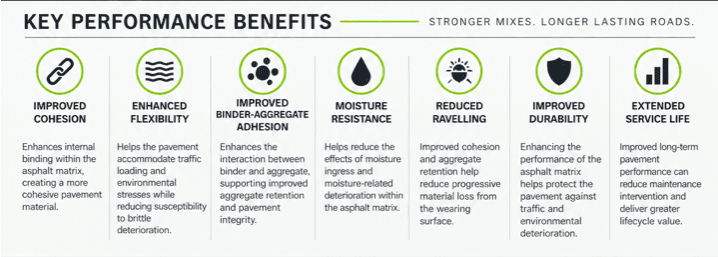
EBS is designed to support improved cohesion, flexibility and binder-aggregate adhesion while increasing resistance to moisture-related deterioration and progressive material loss such as ravelling.
The objective is not simply a stronger mix.
It is a pavement engineered to retain its performance for longer, potentially reducing maintenance intervention and creating greater value throughout its lifecycle.
Stronger mixes. Longer-lasting roads. Greater lifecycle value.
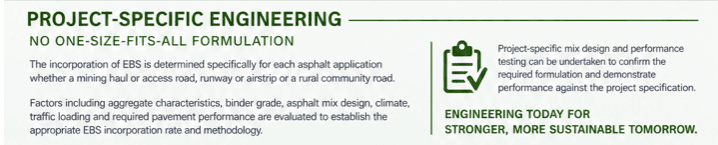
There should never be a one-size-fits-all asphalt formulation.
A mine haul road carrying repetitive heavy loads does not experience the same operating conditions as an airport runway. A rural community road is different again.
Aggregate characteristics, binder grade, asphalt mix design, climate, traffic loading and required pavement performance all influence how the solution should be engineered.
That is why the incorporation of EBS should be determined specifically for each asphalt application and supported, where appropriate, by project-specific mix design and performance testing.
For us, this is an important principle:
Start with the materials. Understand the operating environment. Define the required performance. Then engineer the formulation.
Technology provides the capability. Engineering determines how that capability should be applied.
BETTER ASPHALT STARTS BEFORE THE ROAD IS BUILT
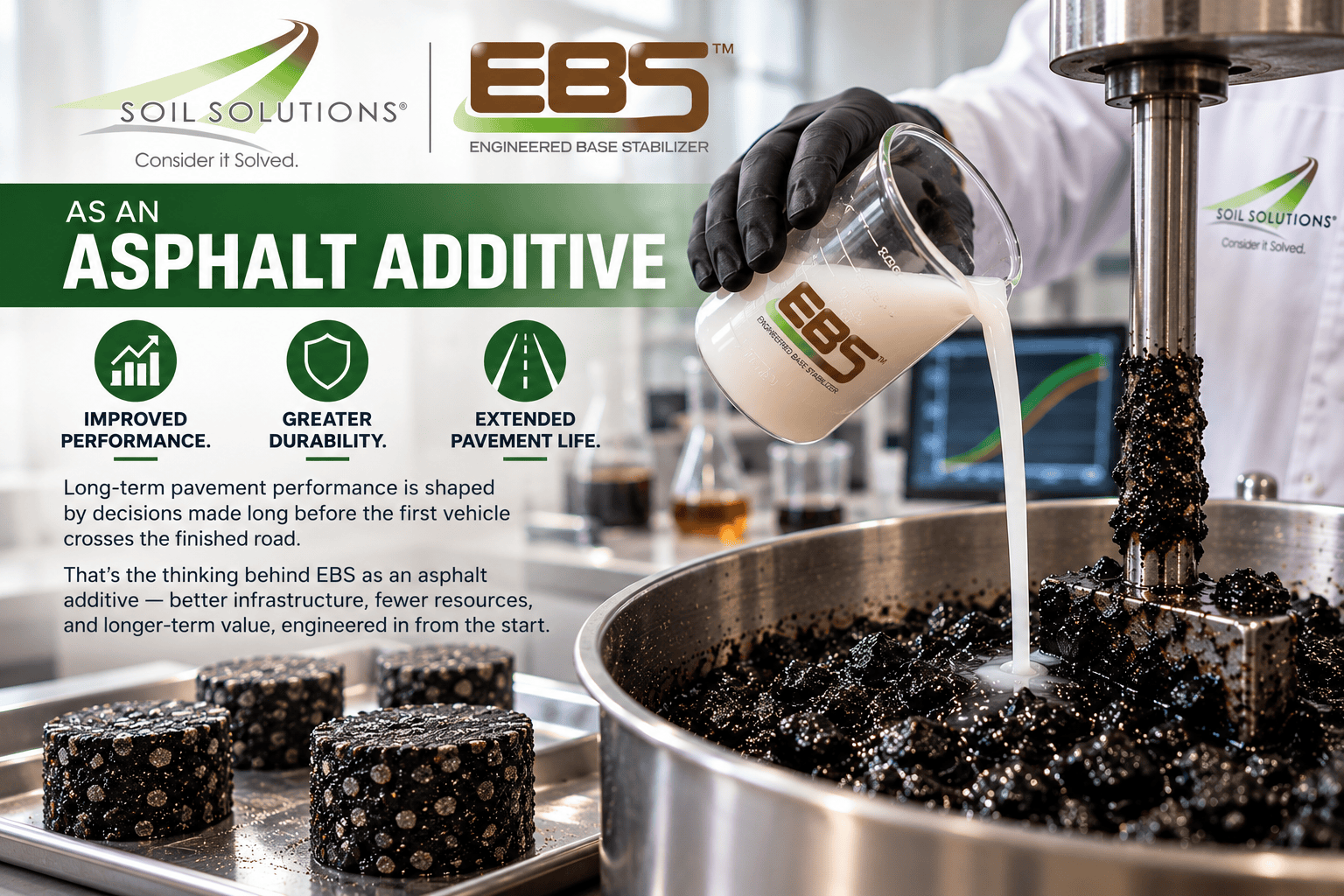
Long-term pavement performance is influenced by decisions made long before the first vehicle travels across the completed road.
Materials. Mix design. Climate. Loading. Moisture. Construction quality. Required service life.
By considering these factors from the beginning, we can move beyond simply asking how a road will be maintained and start asking a more valuable question:
How do we engineer the pavement to perform better for longer?
That is the thinking behind EBS as an asphalt additive.
Engineer performance in. Improve durability. Extend pavement life.
Better Infrastructure. Fewer Resources. Longer-Term Value. Positive Impact.
